Tuesday, July 10, 2012

Behind "Ley of the Minstrel: Spider Dance"

"Ley of the Minstrel" appeared in the second issue of The Cross and the Cosmos (aka TC2) ezine.  It was a fun, swashbuckling story that let me use my love of ships and sailing as I wrote.   

But a new challenge came not long after "Ley..." was published.  A sequel.

"Ley of the Minstrel: Spider Dance" wasn't the story I set out to write when I decided to follow Nerelos into the lands of the Spider Lords. I had a vague idea of a bunch of evil spiders similar to Tolkein's Shelob or Ungoliant. It was very, very vague.

The setting material for Dias Domhan (provided by TC2's editors) reads as follows: "...Within these lands live various magical creatures, the worst of which are the Spider Lords...large intellect spiders who have created web cities and hate humans..."

Spiders.  Hmm.  Things I know about spiders: they spin webs and they eat other bugs. They have lots of eyes and legs. They can move fast and some of the stubby ones jump. A spider frightened Little Miss Muffet. An itsy-bitsy one climbed up a waterspout. I played with daddy-long-legs when I was a kid; and I still capture the occasional wolf spider in the house to set it free in the garden so it can eat other pestiferous bugs that annoy me.

Not enough to fill a story. 

The trouble with research is that sometimes you find yourself fascinated by the subject totally aside from finding what you need to write a story.

My foray into arachnology left me amazed and humbled by the little creatures that inhabit our world. Did I think I had imagination? Hah — what a puny joke! One look at the anatomy of a spider, at the microscopic photographs of the tiniest hairs or the fangs on them boggled my mind. A table of spider silk's tensile strength compared with other materials (such as rope, nylon, or steel) blew my feeble creativity away.

Things I now know about spiders:
Their blood is somewhat clear and faintly blue-tinted because it contains copper rather than iron as ours does.
They can regenerate body parts, even vital organs under some circumstances, during subsequent moultings.
Some spiders can rearrange their retinas as they look at different things.
Some have more intelligence than others. The little jumping spiders can change strategy when they are hunting according to what the prey is doing; sometimes they watch us, seemingly with interest.
There are pirate spiders that prey on other spiders by mimicking web-touching rituals of courtship or prey.
Some spiders fast for incredibly long periods prior to moulting.
Clean cobwebs can be used for impromptu bandages for cuts.
Spiders hear by interpreting air movement touching the complex hairs on their legs. 
In some parts of the world, spiders are kept for the sport of spider fights. 

The list goes on.

I discovered respect for these tiny creatures that made it difficult for me to present them as nothing more than spawns of hell. Their complex nature and amazing structure revealed one small glimpse of God's artistry and creativity. Think of it — real creatures stranger and more astounding than any fictional alien. We usually only notice them when they startle us or when we clean their abandoned webs from corners. I found myself reluctant to vilify them. So, the spiders of my story are not the worst of the magical creatures; and Arctos represents a potential new chapter in the spirits of the Dias Domhan spiders in which they, too, might sing of Dé-Fär. 

Two final notes:
"Ley of the Minstrel" and "Ley of the Minstrel: Spider Dance" will be appearing in TC2's  upcoming anthology from Marcher Lord Press later this year.  Stay tuned for the announcement when the anthology is released.

And, in spite of all I learned, I'm not rushing out to purchase a pet tarantula any time soon. Probably not ever.

Wednesday, June 27, 2012

The Lowly Pencil

There's something enthralling about the humble pencil.

The wood settles into the permanent concavity on the side of my middle finger as I poise the point above paper. The graphite encased in the wood varies in hardness and darkness, from the very faint 7H to the ultra-dark 9B. Or maybe I've got a carbon pencil in hand; it produces lines only slightly different from charcoal.  Or on black paper, the white charcoal and the soapstone pencils are just plain fun.  

Some stroke the paper with a gritty, scritchy sound and feel, but my favorites glide smoothly, effortlessly, as I write or draw.  And if I want to change a spelling, a line, a shadow,  the pencil strokes are not so permanent that an application of eraser can't lighten or remove what I've done.

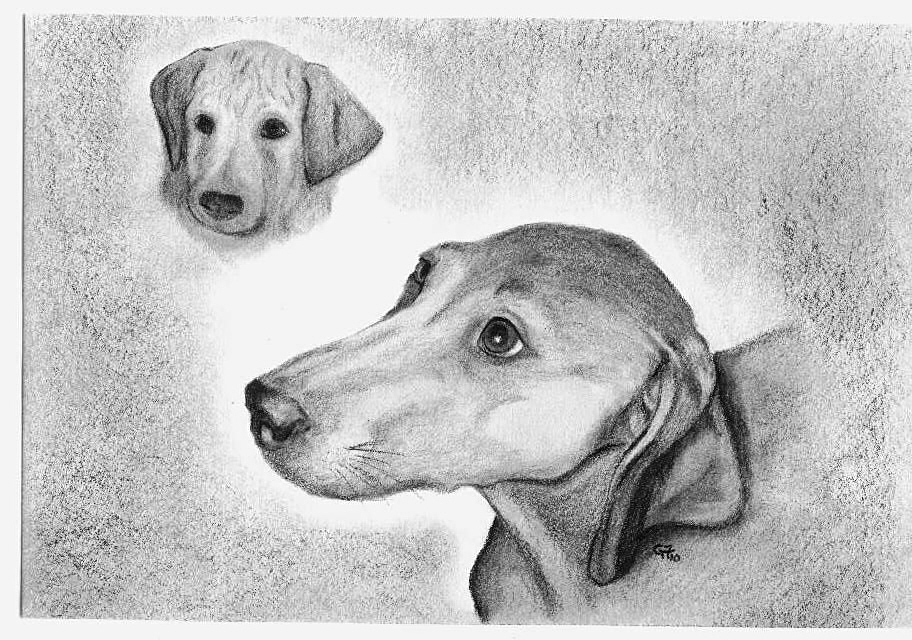
I won't place writing I've done in pencil here.  The keyboard does a more efficient  job for blog purposes.  But writing isn't my only passion.  So, below -- something else I do as I  journey.


Jasper

Echo


Tuesday, June 12, 2012

Detour into the Past

I keep a hand-written journal.
 
I love the feel and subtle scent of the paper and the color of whatever pen I happen to grab or carefully select; there's an intimacy with using them that I don't find with a computer. I slow down for a little while. Handwriting is necessarily slower than using a keyboard.  If the mood strikes, I can doodle alongside the writing or within the writing, turning letters or words into flowers, animals, or knotwork.   I like the tactile variety of bindings and covers available for blank books.    

Once in a while, it's good to go back through retired journals. Sometimes, it's for no more reason than to check whether what I'm remembering at the moment is the same as what I wrote when it actually happened, either an incident or bit of dialog. Sometimes, it's for seeing whether or how much I've grown or changed in my thinking, where I might still be stuck and where I've moved on.  

Because...because on a daily basis, I often don't have enough time for introspection.  The journal enforces as well as records it.

My faith has grown and my confidence has grown.   So has my ability to accept that I'm not perfect and won't be this side of heaven. I'm less of an extrovert than I'd like to be, and there are areas where I'm not as sensible as I should be by now. My hackles still go spiky at the words It can't be done. I laugh at myself more easily and more frequently than I could at any decade younger.   

On the occasional excursions into past years, the events, transformations and illuminations leap into clarity. 

·  Idolatry for my job came crashing down. An injury ended my ability to make a living with the job that was everything to me. Epitaph: Here lies a toppled god -- its fall rocked my world.

·  I ranted about my dogs locking me out of the house an hour before I had to get ready for work. Note to self: never, ever step out the door without a key.   

·  I articulated why I have difficulty getting attached to places.  Thirty moves in about a fifteen-year span makes for shallow roots.

·  My latent tendency to be a smart aleck first blossomed. I told my sister an excavation site for a building was an open pit dirt mine.  Ten minutes later, she smacked me.    

·  A co worker said I reminded him of three people: Mother Theresa, Red Skelton, and Attila the Hun.  I spent four entries trying to figure that out — three entries less than when another coworker told me I was too weird for words.  Guilty as charged that time.

·  I realized I could choose to be content, happy, joyful no matter what circumstances I faced.  Oddly, I didn't note what was happening at the time, what had prompted that entry.  But it was a very good choice.   

And weaving around and through trials and triumphs, questions and revelations,  the condition of my soul or my hangnail, there are snippets of story ideas, characters, and phrases uniquely mine.  Themes and motifs dominant in my writing show up clearly with hindsight.

Hindsight is always 20/20.         

Tuesday, June 5, 2012

Christening Ships that Never Were

Once upon a time, there was a girl who lived inland.  She loved the feel of the earth under her feet when she went hiking. She loved the muffled thud of horse hooves on soft soil and their gritty clatter on rocky trails.  She loved the smell of dusty country roads, of rain on hot pavement, of autumn leaves.

Then one day, she spent an afternoon on a boat in the Gulf of Mexico. The limitless horizon, the sense of unbound freedom, captivated her.  Later, she took sailing classes and sailed on the Pacific. When she couldn't rent a boat, she spent as much time as she could on the beach, watching the waves, inhaling briny winds, dreaming of one day living aboard a boat of her own.  She loved the sea.     

She moved inland once more, and though she rediscovered her love of land, the sea never left her heart.

What does a writer do with a yearning that can't be fulfilled?  Use imagination.

I don't have even a rowboat to take on a pond,  but ships fill my imagination.  Oh, and the vessels there are wonderful.  I christen each one with the launch of a story.  Aboard them, I travel seas and skies and space.  

Fast and sleek, the Minstrel is a harp-ship piloted by music; her great deck-harp sounds the ocean depths for the navigator playing the ship. The Sea Nymph tries to elude sirens who would destroy her on reefs.  The galleon Mer l'Etoile ferries elven ambassadors from Africa while the tramp steamer MereleCroix carries her passengers on Atlantic lanes. In the skies, pale sails of the airships Mind theTrees and Sunbeam billow under stars as their crews, on a rescue mission, battle elements and enemies.
And in space, ships steered by cybernetic navigators carry colonists as they flee a world under a dying sun:  Inspiratum, Astra Ventus, Cantus Lumen, and others.      

So, why settle for a canoe when I have fleets? Today, Tuscan Red launches to pick up a baby dragon for delivery to a new home.   

The only thing missing is the bottle of champagne to smash on Tuscan Red's hull as I christen her.

Tuesday, May 29, 2012

The Ultimate Carnival Ride


Carousel?  Maybe.

Ferris wheel? Rarely that slow & gentle.

Rollercoaster?  Tilt-a-whirl?  Hammer?  Yeah, that's more like it. 

No, I haven't been going to amusement parks and carnivals.  These are metaphors of a busy life, the essence of multitasking in a world where challenges come from every direction, from the purely physical to the mental, intellectual and spiritual compass points.  Just when the climbs & plunges of the rollercoaster slow, just when it looks like I can step off the train, it morphs into a Tilt-a-whirl car spinning chaotically or a Hammer  plastering me to the back of the cage or  (if the carney has trickster hands on the controls) stopping up-side-down.  Kinetic force reasserts and...

Yikes! Toboggan splash, then I'm back on a spiraling coaster.

 God promises that we're never given anything beyond what we can endure.  I amble wobbly-legged down the midway and into the funhouse.  Check my short/tall/thin/fat/wavering reflections.  I'm not sweating blood like Jesus did in the garden of Gethsemane.  None of this is stress, then. It's only challenges, it's only annoyances, it's only a high rate of interest and event.  I grin and amble back to the ride.   It strains the limits of my inner gyroscope but God makes sure it's never tested to destruction.
 
And I haven't barfed.          

Tuesday, October 25, 2011

Wardrobe of Conference

Resuming my neglected blog. 

An uh-oh moment, not quite panic but definitely not serenity, seized me.  What do you wear to a  Christian writing conference? 

Was this some hidden aspect of vanity?  Probably not.  It's a practical quasi-panic.  I looked at online pictures from other conferences.  The people are decked out as if they're going to a wedding, to a New Year's Eve party, to the Oscars.  Yikes! 

The conference is the Heart of America Christian Writers Network Fall Conference, November  10-12, held in Overland Park, Kansas.  I'm not just attending.  I'm teaching in three workshops.  At one time, just the thought of public speaking would've been enough to make me physically ill; but that was decades ago.  I know the material well—it's part of my writing passion.  I've worked on the job with the public long enough that speaking in front of strangers isn't the terror it once was.  That plus age has produced plenty of confidence so I won't wad up like a roly-poly bug.

"Office attire" several websites advise.  My office attire is veterinary scrubs.  On any given day, when I'm not answering the phone or checking patients in/out, my attire may acquire additional decorations of blood, cat urine, doggy diarrhea (few experiences quite like a puppy loosing its bowels in your shirt pocket), and the occasional splatter of ferret barf.  No, this is not suitable for a conference.

But before working in a vet office, I worked in electronics and in machining.  Electronics was clean, but t-shirts/sweat-shirts and jeans were perfectly acceptable.  Same for machining, although my last machining job was in a shop that worked a lot of cast iron — dirty machining, you couldn't touch a surface anywhere without picking up smears of greasy, black dust.  Most of my clothes from those days had interesting scorches & burn holes from glowing hot metal chips, frays from abrasives and compressed air blasts,  and an overall aroma of industrial cleaners & coolants no amount of laundry time could banish.  Nope — not conference attire.

Hence, an email to the conference coordinator.  A nice guy — and a quick reply.

"Casual."

Sweet!  Slacks & sweater will work.  I won't have to worry about falling off high heels (which I've only worn twice in my life).  I can concentrate on the workshop topics. Poetry.  Experimental Fiction, Science Fiction and Fantasy: Fiction Outside the Boxes.  Symbolism:  Understanding and Using It for Christian Writers.

Looking forward to this conference! 

And totally aside, I glanced at my first blog entry on that hot August day.  I was ready for fall then— and so thankful it's here now.   Love the colorful leaves, cool winds, and crisp days.  Love October!

Saturday, September 10, 2011

Interlude for a Review: On Being a Rat And Other Observations by Chila Woychik

The book is propped next to my computer.  A charming rat peers over the rumpled paper sign it holds bearing the book's title: On Being A Rat And Other Observations.  In the lower corner, the author's name, Chila Woychik, is in red against a cheese yellow background. 

Inside the cover, my name is listed with others for editorial assistance as well as for the illustrations; and it's mentioned in the dedication.  This particular book has a brief, handwritten note to me from Chila. When she wrote it, she had no way of knowing she dated it on my parent's wedding anniversary.  This very special book became unintentionally but personally, poignantly special.

I posted this review elsewhere:

 I have to admit I was dubious when asked to edit On Being a Rat. I don’t usually read autobiographical works, creative or otherwise.  But the first section I saw (and each one thereafter)—WOW! Just WOW! What a rare gem!

One of the things that captivated me most about On Being a Rat was Chila's willingness to bare her soul, to be utterly transparent and vulnerable in her honesty. Honesty is a rare commodity in this present age; truth and honesty don’t always mean the same thing. Too often, all you see is the public mask— in …Rat, it’s totally “mask off”. 

Another thing is the sheer beauty and creativity in the language Chila uses. Nothing obscure or convoluted, nothing so lofty that a reader can’t follow, but nonetheless powerful and thought-provoking even in the flashes of humor. Stark and lovely!

 Her imagery is solid and logical even when she makes unexpected comparisons and observations. If one of her poems or lyrical passages were a photograph, the angle may be unusual, the focal point uncommon (or even bizarre); but the image is sharp enough that no one can say, “Well, there’s something on photo paper but I sure can’t tell what it is.” She writes with a razor.

She takes an uncommon genre, the lyric essay, to a new level that's fierce and friendly, thoughtful and profoundly creative.  On Being a Rat is a wonderful treasure to be read and reread with fresh discoveries awaiting the reader each time.  A unique masterpiece!

I wanted to add a bit more about what's been called the Rat book or OBAR.   For one thing, it's shown me that creative nonfiction, the lyrical essay, is not dull autobiography or self-indulgent whining about life.  It's an art form with foundations in essay, memoir, and poetry. Content and structure combine with poetic flow of words and sentences and with a masterly use of metaphors.  And I, fiction writer that I am, can't help but feel the prickle of challenge — could I write this personally this well?  I don't know; but I have doubts — I like the buffer zone of fictional characters and I'm not certain I could override my reluctance to be so vulnerable on the page.  But should  I ever decide to expand my own writing horizons, OBAR is a masterpiece on multiple levels, worth learning from, worth studying.
  
One other especially delightful thing about OBAR:  After the initial straight-through reading, I found I can open it at any section without becoming a context castaway.  Treasures abound even on a single page — a unique phrasing, a pinpoint metaphor, an illuminating observation.  Some pages are chatty,  as though Chila's sitting across a café table from me.  With each chapter I read, I come away thinking This one's my favorite chapter —until I pick the Rat book up again and read something that challenges how I think about writing or nature or...  Then I think This one — more favorite than my last favorite.  Or reading in a different mood This one's my favorite today. 

Awww, what the heck — I love the whole book!
Thanks, Chila,  for writing On Being a Rat!